Westlands
Oakman Insurance Agency
Child Medical Insurance in Kenya: Protect Your Child Without Taking a Family Medical Plan
Immediate Financial Peace of Mind
Every parent wants to know that when a child falls sick, medical treatment will be available without having to find a large amount of money at short notice. Children may need medical attention for ordinary illnesses, infections, accidents, specialist consultations, diagnostic tests or hospital admission.
Standalone Junior Protection
Standalone child medical insurance allows a parent or guardian to arrange medical protection specifically for a child. The parent does not necessarily have to be insured under the same policy. It is particularly useful for single parents, guardians, grandparents, or those whose employer scheme excludes dependants.

What Is Standalone Child Medical Insurance?
Standalone child medical insurance is a health insurance arrangement where the child is the person insured. It is different from simply adding a child to a parent's family medical policy.
Clear Financial Purpose
The purpose is straightforward: give the child access to healthcare while helping the parent manage eligible medical expenses within an agreed annual benefit limit.
Flexible Plan Structures & Benefits
A junior medical plan may be structured around inpatient hospital care, outpatient day-to-day treatment, or both.
Comprehensive Add-Ons Available
Depending on the plan, additional benefits can include dental, optical, wellness, vaccinations, emergency response, chronic condition treatment, congenital condition benefits, and mental health support. These are plan-specific and should be confirmed before purchase.
Who Needs Child-Only Medical Insurance in Kenya?
✓
Parents who want to insure one child without taking a full family medical policy.
✓
Single parents who want dedicated medical protection for their child.
✓
Parents whose employer medical scheme does not include their children.
✓
Parents who have medical insurance but want a separate, higher or more suitable limit for a child.
✓
Guardians responsible for a child's healthcare.
✓
Grandparents raising or supporting grandchildren.
✓
Parents working abroad who want medical protection arranged for children living in Kenya.
✓
Families with children who need regular outpatient consultations.
✓
Parents who want access to private hospitals without paying every medical bill directly.
✓
Families looking for child medical insurance with inpatient and outpatient benefits.
✓
Parents looking for a junior medical plan that can continue as the child grows.
Child-only cover can therefore address a practical gap: a child can have medical insurance even when the adults responsible for the child are not taking the same medical policy. This standalone structure is explicitly offered by current child-focused products in Kenya.
At What Age Can a Child Join a Junior Medical Plan?
Varying Market Entry Ages
There is no single entry age across the Kenyan market. Current products show different approaches. For example, one child-focused plan accepts children from 37 weeks, while another accepts children from birth and allows older dependants subject to schooling requirements.
Another junior plan has a minimum age of three months after clinical discharge and a maximum entry age of 18 years, with some extension for students.
Important Guidelines for Newborn Babies
This matters for parents with newborn babies. Do not assume that every child medical insurance policy starts immediately at birth.
Always ask about the following key details:
- Minimum joining age
- Newborn eligibility rules
- Birth notification requirements
- Medical discharge requirements
- Whether neonatal or congenital conditions have special terms
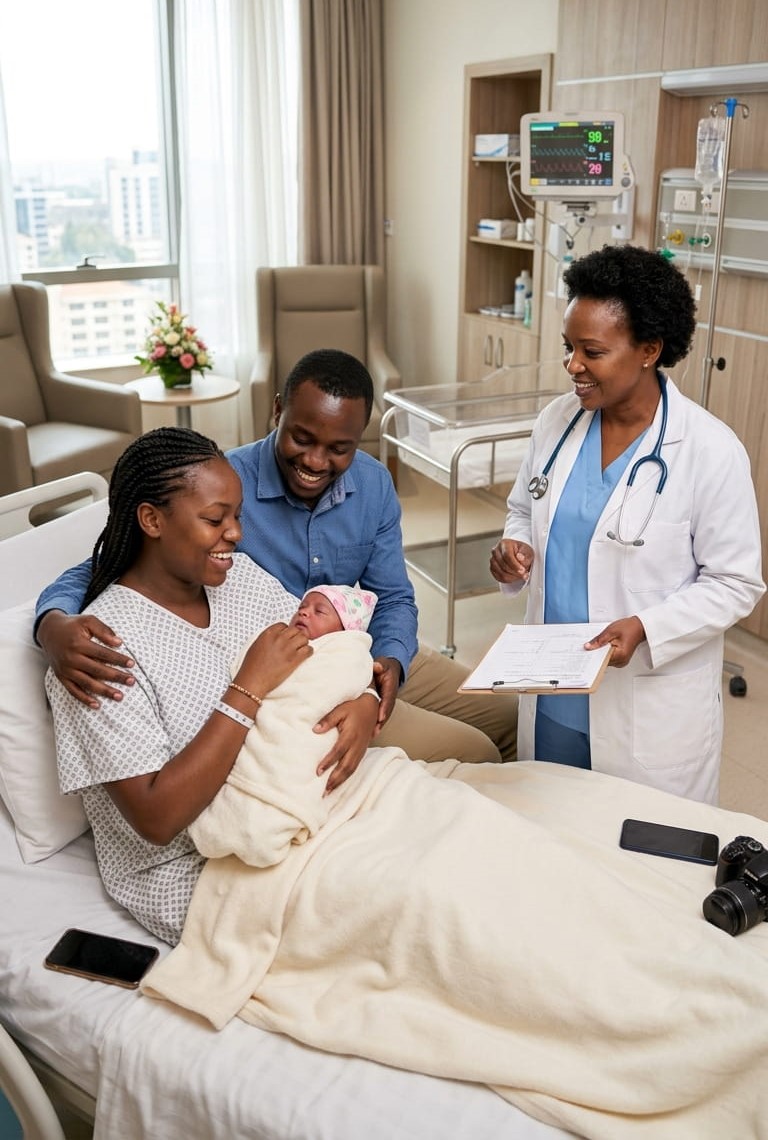
Child Medical Insurance for Newborn Babies
Healthcare Needs and Eligibility
Newborn medical needs can include paediatric reviews, vaccinations, treatment of infections, diagnostic tests and, in some circumstances, hospital admission. However, newborn eligibility is one of the areas where medical plans differ most.
Some current junior products specifically advertise eligibility from early infancy, while others apply minimum-age conditions.
Key Questions Before Buying Cover
Before buying cover for a newborn, ask:
- From what age can the baby join?
- Does the insurer require a birth notification or birth certificate?
- Does the baby have to be medically discharged before joining?
- Are congenital conditions covered?
- Are neonatal conditions covered?
- What waiting periods apply?
- Are vaccinations included?
- Is outpatient treatment available?
- Is inpatient cover available from commencement or after a waiting period?
Tailored Child Medical Insurance by Developmental Stage
Infants & Toddlers
Babies, Toddlers and Young Children
The healthcare needs of a two-year-old are different from those of a teenager. Younger children may experience repeated outpatient visits for infections, fever, respiratory problems, stomach upsets, allergies and other common childhood conditions.
For this age group, outpatient medical insurance can be particularly useful because many medical expenses occur without hospital admission.
When comparing plans for babies and toddlers, look beyond the inpatient limit. Ask about outpatient limits, paediatric consultations, laboratory tests, prescribed medicines, vaccinations, emergency treatment and the provider network available close to home.
Primary & Secondary
School-Going Children
Once children start school, healthcare needs can include routine illness, accidents, sports injuries, infections, specialist consultations, dental treatment, optical care and hospitalisation.
Parents should consider whether the provider network includes facilities near the child's school and home. A high medical limit is less useful if accessing treatment is difficult or the preferred facility is outside the applicable provider network.
Some child-focused plans offer broad provider access, while lower-cost options may use more defined hospital networks. Current market offerings demonstrate both approaches.
Teens & Students
Teenagers
Teenagers still require medical protection. They may need outpatient treatment, specialist consultations, dental and optical care, mental-health support, emergency treatment, sports-related care, diagnostics and hospitalisation.
Parents should also check what happens when the child reaches the maximum age. Some products allow continued cover for students beyond the standard child age, while others provide a transition into adult medical plans.
What Does Junior Medical Insurance Cover?
01
Inpatient Medical Cover
Inpatient cover applies when your child is admitted to hospital. Depending on the plan, eligible benefits may include hospital accommodation, doctors' fees, surgery, theatre charges, specialist treatment, ICU care, medicines, investigations, diagnostic procedures and other hospital-related services.
02
Outpatient Medical Cover
Outpatient cover pays for eligible healthcare where the child does not need to be admitted. This can include GP or paediatric consultations, specialist visits, laboratory tests, diagnostic investigations and prescribed medicines. Outpatient benefits can be subject to their own annual limits or sub-limits.
03
Paediatric Consultations
A child may need a doctor who understands childhood conditions and development. Where paediatric services are available within the selected provider network, they can form part of the outpatient or specialist benefit.
04
Specialist Medical Treatment
Depending on the plan, children may access specialists such as paediatricians, ENT specialists, ophthalmologists, orthopaedic specialists, dermatologists, surgeons, cardiologists and other specialists.
05
Diagnostic Tests
Medical insurance can help cover eligible diagnostic investigations such as laboratory tests, X-rays, ultrasound, CT scans and MRI where medically necessary and included in the benefit.
06
Prescribed Medicines
Many outpatient plans include prescribed medicines subject to the plan limit and provider arrangements.
07
Emergency Treatment
Emergency care may be included, particularly for accidents and sudden medical conditions. Always check the emergency definition, provider arrangements and authorisation requirements.
08
Ambulance or Emergency Response
Some junior medical plans include emergency response or ambulance benefits. The service and geographical scope vary by plan.
09
Vaccinations and Wellness
Some child-focused plans provide vaccination and wellness benefits. These can be especially valuable during early childhood. Check the exact vaccine schedule, age restrictions and annual limit.
10
Dental Treatment
Dental benefits may be included or available as an add-on. Depending on the plan, treatment can include consultations, examinations, fillings, extractions and other eligible dental procedures.
11
Optical Treatment
Optical benefits may cover eye examinations, prescription lenses, frames or other eligible optical services, subject to the plan.
12
Mental Health and Counselling
Some current child-focused plans include counselling and therapy under outpatient and/or inpatient benefits. This is increasingly relevant as parents consider the child's overall health rather than hospital treatment alone.
13
Chronic Conditions
Some plans cover chronic conditions, but waiting periods and limits can be significant. Parents should specifically ask about asthma, diabetes, epilepsy and other ongoing conditions.
14
Congenital Conditions
Some comprehensive child plans advertise congenital-condition benefits. These benefits can have special waiting periods, sub-limits or underwriting conditions.
15
Critical Illness
Some junior medical products include or offer critical-illness protection. The illnesses covered, benefit amount and qualifying conditions vary.
16
Last Expense Support
Some child-focused health plans combine medical benefits with a last-expense benefit. Where available, parents should check the amount and conditions.
17
COVID-19 and Respiratory Illness Care
Some current junior products include COVID-19-related treatment or home-care benefits. Benefits change over time, so the current policy schedule should always be checked.
Need help comparing these benefits across different Kenyan insurers?
Compare Coverage on WhatsAppInpatient vs Outpatient Medical Insurance for a Child
| Type of Care | Simple Explanation | Examples |
|---|---|---|
| Inpatient | Your child is admitted to hospital. | Admission, surgery, ICU, hospital accommodation, eligible doctors' and specialist fees |
| Outpatient | Your child receives treatment without being admitted. | Doctor visit, paediatric consultation, laboratory tests, prescribed medicine, follow-up |
| Emergency | Urgent treatment following an accident or sudden medical event. | Emergency consultation, accident treatment, ambulance where included |
Can You Buy Inpatient Cover Only?
A child can have a large inpatient limit but still have relatively limited outpatient benefits. When comparing junior health insurance, look at both rather than focusing only on the headline annual limit.
Yes, some junior medical plans are structured with inpatient as the core benefit and outpatient as an optional addition. Other products combine inpatient and outpatient in the main package. The structure depends on the insurer and plan selected.
If your child rarely visits a doctor but you want protection against a major hospital bill, inpatient-only cover may be worth considering. If the child frequently requires consultations, tests or medicines, outpatient cover becomes more important.
Shared Child Limit vs Individual Limit
Shared Medical Limit
A shared limit means one annual amount is available to more than one child. For example, a KES 1 million shared limit could be used by any of the insured children, subject to policy terms.
Individual Medical Limit
An individual limit gives each child a separate annual medical benefit. If two children each have a KES 1 million limit, each has their own KES 1 million benefit, subject to policy terms.
Both structures are available in the Kenyan market. Some current child-focused products specifically allow shared or per-person arrangements.
How Much Does Child Medical Insurance Cost in Kenya?
Understanding Junior Premium Factors
There is no single junior medical insurance price that applies to every child. Premium depends on the child's age, medical limits, provider network, inpatient and outpatient benefits, optional dental or optical benefits, underwriting and other policy features.
Online market comparisons also show that child-only products can offer different inpatient limits and optional outpatient structures. For this reason, parents should compare the benefit structure rather than searching only for the cheapest premium.
For an accurate quotation, Oakman Insurance Agency will normally need the child's age, number of children, preferred medical limit and benefits required.
What Makes a Child Medical Plan Affordable?
- Choosing an inpatient limit that matches the family's budget and expected level of protection.
- Selecting outpatient only when the child needs regular day-to-day medical care.
- Using a provider network that gives access to suitable hospitals without unnecessarily increasing the premium.
- Choosing shared cover where it provides the right balance for several children.
- Adding dental and optical only where the benefits justify the additional premium.
- Comparing waiting periods, exclusions and limits rather than comparing price alone.
Affordable does not necessarily mean the lowest premium. A lower premium may come with a smaller medical limit, narrower provider access, more restrictive benefits or higher sub-limits.
Understanding Medical Insurance Waiting Periods for Children
Waiting Period Structure
A waiting period is the period between the start of a medical policy and the date a particular benefit becomes claimable. Waiting periods can differ by type of treatment.
Current junior medical products in Kenya illustrate this clearly. One current plan lists immediate accident cover, a 30-day period for outpatient and acute inpatient care, three months for newly diagnosed chronic inpatient care, 12 months for pre-existing chronic conditions, congenital conditions, cancer and HIV/AIDS, and 24 months for organ transplants. Another junior product lists one month for illnesses, no waiting period for accidental cases, one year for surgery and 10 months for chronic and pre-existing conditions.
These are examples from specific products—not universal Kenyan rules. Always confirm the waiting periods applicable to the plan being purchased.
Pre-Existing, Chronic & Congenital Conditions
Pre-Existing & Chronic Conditions
A pre-existing condition is a medical condition that existed before the start of the policy, subject to the insurer's definition and policy wording. Chronic conditions are ongoing conditions that may require continuing treatment.
Parents should disclose medical information accurately during application. Ask specifically about waiting periods, sub-limits, medical underwriting and whether conditions like asthma, diabetes or epilepsy are covered.
Congenital Conditions
Congenital conditions require particular attention when buying medical insurance for a baby or young child. Some junior medical products specifically advertise congenital-condition benefits, while the terms, waiting periods and limits vary.
If you are buying cover for a newborn, ask the insurer or broker to explain the congenital and neonatal provisions in plain language before paying the premium.
Understanding Provider Networks & Medical Usage
What Is a Provider Network & How to Choose One
A provider network is the group of hospitals, clinics, medical centres, specialists, laboratories, pharmacies and other healthcare facilities through which insured members can access treatment under their medical plan.
For a child, location matters. A parent may want facilities close to home, school, work or relatives who care for the child. When comparing junior medical insurance in Kenya, ask whether the network provides access in Nairobi and other counties where the child may spend time.
- Check the hospitals closest to your home and school.
- Check whether paediatric services and specialist hospitals are included.
- Check access outside Nairobi if your family travels.
- Check whether dental and optical providers are included if selected.
- Ask how emergency treatment is handled and if out-of-network care is reimbursed.
Pre-Authorisation & Using Your Child's Cover
Pre-authorisation means the insurer or its medical administrator confirms approval for certain treatment before it is undertaken. It is commonly relevant for planned admissions, surgery, specialist procedures or high-cost investigations.
Steps to Use Your Cover Smoothly
- Confirm the facility is within your applicable provider network.
- Carry the child's membership details or required identification.
- Inform the facility of the medical insurance prior to treatment.
- Ask if the planned treatment requires pre-authorisation.
- Confirm co-payments, excess, or excluded items before proceeding.
- Keep copies of medical documents, receipts, and follow claims steps.
Exclusions & Specialized Benefit Provisions
Policy Exclusions & Government Cover
Common exclusions in child medical products can include cosmetic procedures, experimental treatment, non-medically necessary items, nutritional supplements, and expenses recoverable under another policy.
Private medical insurance and government-sponsored health financing are not interchangeable; ask how the private insurer coordinates expenses with other health schemes.
Dental, Optical & Vaccinations
Dental and optical benefits may be included or offered as optional add-ons. Check whether consultations, fillings, extractions, braces, eye exams, and frames are covered.
For vaccinations, request the specific vaccine schedule, eligible age limits, and annual allowances before finalizing the policy.
Mental Health, Accidents, Surgery & Cancer
Many junior plans cover mental health therapy, immediate accident care, eligible surgeries, and oncology treatment. Always confirm waiting periods, pre-authorisation terms, and specific limits for specialized procedures.
Special Household Structures & Comparisons
Special Healthcare Needs, Diaspora & Guardians
Families whose children need regular therapy, specialist consultations, or chronic medication should disclose diagnosed conditions at application stage to confirm written terms.
For parents living/working abroad, or guardians and grandparents raising children in Kenya, standalone junior medical cover offers a structured way to maintain health access without requiring principal adult membership.
Information Required to Quote
Providing accurate details helps us find suitable options and avoid unexpected underwriting delays:
- Child's date of birth or age and number of children.
- Preferred annual inpatient limit and outpatient preference.
- Dental/optical requirements and preferred hospital location.
- Known medical conditions that must be disclosed.
- Shared vs. individual limit preference across siblings.
Standalone Child Cover vs Family Medical Cover
| Feature | Standalone Child Cover | Family Medical Cover |
|---|---|---|
| Who is insured? | Child or children | Parent(s) and eligible dependants |
| Parent must be insured? | Not necessarily | Normally requires principal member |
| Dedicated child limit? | Can be structured specifically for the child | Usually shared within overall family limit |
| Useful for one child? | Yes | May be less targeted |
| Useful for whole household? | No; designed around children | Yes |
| Best comparison points | Child's limits, network, waiting periods & benefits | Total family limits, age bands & family benefits |
Checklist: How to Compare Child Medical Insurance in Kenya
- Compare the annual inpatient limit and outpatient limit.
- Check whether outpatient is included or optional.
- Compare provider networks and check if your preferred hospital is included.
- Review waiting periods for illnesses, surgery, chronic and pre-existing conditions.
- Ask about congenital and neonatal conditions.
- Check dental, optical, emergency, ambulance, vaccination, and wellness benefits.
- Check mental-health, counselling, critical illness, or oncology benefits.
- Review exclusions, age limits, and student extensions.
- Compare total annual premiums and ask about available installment plans.
Frequently Asked Questions About Child Medical Insurance in Kenya
Can I buy medical insurance for my child only? +
Yes. Standalone child medical insurance is specifically designed for this purpose, subject to the eligibility requirements of the selected plan.
Can I insure my child if I am not insured? +
Yes. Some current child-only medical plans explicitly allow a parent or guardian to insure the child without being insured on the same plan.
How much is child medical insurance in Kenya? +
The premium depends on the child's age, annual medical limit, outpatient benefits, provider network and optional benefits. A quotation is required for the exact premium.
What is the cheapest child medical insurance in Kenya? +
The cheapest premium is not necessarily the lowest-cost option in practice. Compare the medical limit, outpatient benefit, hospital access, exclusions and waiting periods before choosing.
Is there medical insurance for a newborn baby in Kenya? +
Yes, some plans accept children from birth or early infancy, while others have minimum-age conditions. Confirm the specific eligibility requirements before buying.
Does junior medical insurance cover outpatient treatment? +
Many junior plans provide outpatient treatment, while some make outpatient an optional addition to inpatient cover.
Does child medical insurance cover hospitalisation? +
Inpatient hospital treatment is a core benefit of many junior medical plans.
Does child medical insurance cover surgery? +
Eligible surgery can be covered under inpatient benefits, subject to waiting periods, authorisation, limits and exclusions.
Does child medical insurance cover vaccinations? +
Some plans include vaccination or wellness benefits. The exact vaccines and limits depend on the policy.
Does child medical insurance cover chronic conditions? +
Some plans cover chronic conditions, but waiting periods, underwriting and limits can apply.
Does child medical insurance cover congenital conditions? +
Some child-focused plans provide congenital-condition benefits. Always check the specific conditions, waiting period and limit.
Can I insure one child only? +
Yes, depending on the plan.
Can I insure more than one child? +
Yes. Some plans allow several children to be covered, with either shared or individual limits depending on the product.
Can siblings share a medical limit? +
Some plans offer shared limits across children. Others rate each child separately.
Can each child have an individual medical limit? +
Some plans offer individual or per-person limits.
Does junior medical insurance cover dental? +
Dental cover may be included or available as an add-on, depending on the plan.
Does junior medical insurance cover optical? +
Optical cover may be included or available as an add-on, depending on the plan.
Does junior medical insurance cover mental health? +
Some current child plans include counselling and therapy.
Does child medical insurance cover accidents immediately? +
Some plans provide accident cover from the start date while applying waiting periods to illness-related benefits. Confirm the exact terms of your selected plan.
What happens when my child turns 18? +
This varies. Some plans allow student extensions, while others provide a pathway into adult medical cover.
Can a guardian buy child medical insurance? +
Some child-only products allow a guardian or parent to arrange cover, subject to eligibility and documentation.
Can grandparents buy medical cover for a grandchild? +
A grandparent who is responsible for the child can explore eligible standalone junior medical plans, subject to the insurer's requirements.
Can a child medical plan be paid monthly? +
Payment options vary by insurer and product. Ask Oakman for the available payment structure for the selected plan.
Can I change the medical limit later? +
Changes are subject to the insurer's rules and may require underwriting or take effect at renewal.
Can I use any hospital in Kenya? +
Not automatically. Treatment is generally accessed through the provider network applicable to the selected plan, except where emergency or out-of-network rules provide otherwise.
What is a medical provider network? +
It is the group of healthcare facilities through which members can access covered treatment under the medical plan.
Do child medical plans have waiting periods? +
Yes, many plans have waiting periods for particular benefits. The period differs by product and treatment.
What is pre-authorisation? +
It is approval required from the insurer or medical administrator before specified treatment is undertaken.
What documents are needed to insure a child? +
Requirements vary, but may include the child's identification or birth documentation, parent/guardian details and a completed medical application form.
Have a question not listed here? Talk directly to our insurance specialists.
Ask a Question on WhatsAppNavigating Child Medical Cover Wisely
Child Medical Insurance: Common Mistakes Parents Should Avoid
- Buying purely on the lowest premium.
- Assuming a large inpatient limit automatically means unlimited treatment.
- Failing to check outpatient limits.
- Assuming every hospital is included.
- Not checking waiting periods.
- Not disclosing existing medical conditions.
- Assuming congenital conditions are automatically covered.
- Assuming dental and optical are automatically included.
- Not asking what happens when the child reaches the maximum age.
- Buying cover after a known medical problem and expecting that existing problem to be immediately covered.
- Failing to keep membership information and emergency contacts accessible.
Why Compare Benefits, Not Just Premium
Two child medical policies can have very different prices because they can have very different benefit structures.
One may offer a larger inpatient limit but limited outpatient treatment. Another may offer a smaller inpatient limit with stronger day-to-day outpatient benefits. Another may provide broader hospital access, while a lower-cost option may use a more controlled network.
The Right Formula for Comparison
Premium + Annual Limits + Outpatient + Hospital Access + Waiting Periods + Exclusions + Additional Benefits
How Oakman Insurance Agency helps: We assist parents and guardians in evaluating available junior medical options based on your child's age, preferred limits, budget, location, and specific medical requirements. Our objective is to ensure you understand what the policy actually delivers when care is needed.
Trusted • Reliable • Customer-Centric
Get a Child Medical Insurance Quote in Kenya
Looking for standalone child medical insurance in Kenya? Whether you need cover for a newborn, toddler, school-going child or teenager, Oakman Insurance Agency can help you explore available junior medical options.
Tell us the child's age and the type of cover you need. We can then guide you on available inpatient limits, outpatient options, provider networks, and additional benefits.
Call / WhatsApp: 0710 918 201

Trusted insurance partner for families and businesses across Kenya. We provide personalized coverage with integrity and care

Contact us
-
-
One Africa Place, 5th Floor, Waiyaki Way, Westlands, Nairobi, Kenya
-
+254 710 918 201
All rights Reserved by Oakman Insurance Agency